

Introduction
Language serves as more than just a communication tool; it reflects the values, philosophy, and cultural understanding of the people who speak it. Swedish, like many Nordic languages, contains words that encapsulate complex concepts about human behavior, morality, and social responsibility in ways that single English words cannot fully capture. Gärningar represents one such term that offers fascinating insights into Swedish perspectives on actions, deeds, and the moral weight of human behavior. This comprehensive guide explores every dimension of gärningar, from its linguistic roots and literal meanings through its cultural significance and practical applications. Whether you are learning Swedish, exploring Nordic philosophy, or simply curious about how different cultures conceptualize human actions, understanding this term opens windows into Swedish thought patterns and values that have shaped one of the world’s most progressive societies.
Understanding the Basic Meaning of Gärningar
Gärningar is the plural form of the Swedish word gärning, which translates most directly to acts, deeds, or actions in English. However, this simple translation does not capture the full semantic range and cultural connotations that the term carries in Swedish usage. The word derives from the verb göra, meaning to do or to make, with the suffix creating a noun that emphasizes completed actions with observable consequences rather than mere intentions or thoughts.
The linguistic structure reveals interesting aspects of how Swedish speakers conceptualize human behavior. Unlike more neutral terms for actions, gärningar carries implicit moral weight, suggesting deliberate choices that have significance beyond their immediate physical execution. When Swedish speakers use this term, they often reference actions that matter, that carry consequences, or that reveal something about the character of the person performing them.
Context determines the specific connotation, as gärningar can describe both positive and negative acts depending on modifying adjectives and surrounding language. Good deeds, charitable acts, and heroic actions all fall under the category of positive gärningar, while crimes, misdeeds, and harmful actions represent negative manifestations. This flexibility makes the term broadly applicable across moral, legal, religious, and everyday conversational contexts throughout Swedish society.
The Cultural Context of Gärningar in Swedish Society
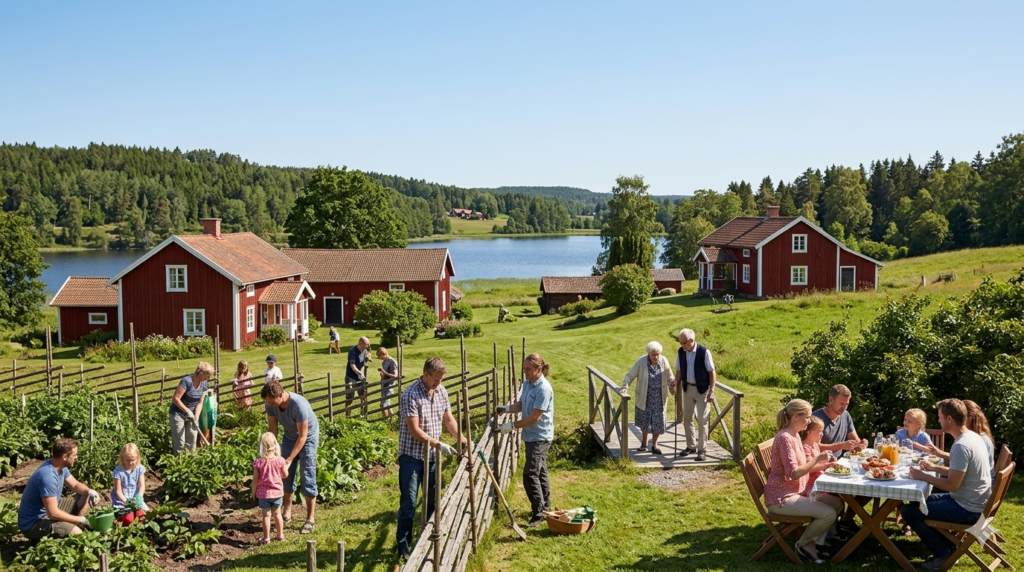
Swedish culture places considerable emphasis on personal responsibility and the belief that individuals should be judged primarily by their actions rather than their words or intentions. This cultural value creates an environment where gärningar takes on particular significance as the tangible evidence of a person’s character and values. The concept aligns with broader Scandinavian philosophical traditions that prioritize pragmatism and observable outcomes over abstract theorizing.
The Protestant Reformation and Lutheran theological traditions that shaped Swedish religious history contributed significantly to how gärningar is understood culturally. Lutheran theology emphasized that good works, while not sufficient for salvation, nonetheless represented important expressions of faith and gratitude. This theological background created cultural frameworks where actions gained moral significance as demonstrations of inner character and spiritual condition.
Modern Swedish society, despite increasing secularization, retains cultural DNA from these historical influences. The emphasis on social responsibility, collective welfare, and individual contribution to societal good all reflect values where gärningar serves as a measure of citizenship and community participation. Swedish concepts like lagom, the idea of just the right amount, and allemansrätten, the right of public access to nature, both connect to broader frameworks where actions carry responsibilities and consequences that extend beyond individual concerns.
Gärningar in Legal and Criminal Justice Contexts
Within Swedish legal terminology, gärningar takes on specific technical meanings related to criminal acts and legal violations. The term appears frequently in legal documents, court proceedings, and criminological discussions as a formal way to reference acts that violate laws or social norms. Brottslig gärning, meaning criminal deed, represents the standard legal phrase for offenses prosecuted within the Swedish justice system.
The Swedish approach to criminal justice reflects unique perspectives on how gärningar should be understood and addressed. The rehabilitation-focused Nordic model treats criminal acts not merely as violations requiring punishment but as behaviors stemming from circumstances that can potentially be changed through intervention and support. This philosophical approach influences everything from prison conditions to sentencing guidelines, with the underlying belief that people can move beyond past gärningar through proper assistance and changed circumstances.
Restorative justice practices in Sweden emphasize understanding the full impact of harmful gärningar on victims, communities, and even perpetrators themselves. This approach seeks to address the consequences of actions comprehensively rather than simply applying standardized punishments. The focus on repairing harm and preventing future negative gärningar distinguishes the Swedish system from more punitive approaches found in many other countries.
Religious and Philosophical Dimensions of Gärningar
Religious contexts in Swedish Lutheran tradition frequently employ gärningar when discussing the relationship between faith and works. Theological discussions distinguish between actions performed from genuine faith versus those done merely for appearance or self-interest. The quality and motivation behind gärningar matter as much as the observable actions themselves in these religious frameworks.
Swedish religious literature and hymnody contain numerous references to gärningar as expressions of divine will or Christian duty. The concept appears in translations of biblical texts, particularly passages dealing with judgment, righteousness, and moral behavior. Understanding how gärningar functions in these religious contexts provides insights into Swedish spiritual thought and the integration of action-oriented ethics within faith traditions.
Philosophical discussions beyond strictly religious contexts also engage with gärningar when exploring questions of ethics, free will, and moral responsibility. Swedish philosophers and ethicists examine how actions relate to intentions, circumstances, and consequences in determining moral worth. These scholarly discussions often reference gärningar as a central concept in understanding human moral agency and the bases for ethical evaluation.
How Gärningar Relates to Swedish Language Learning
For students of Swedish language, understanding gärningar and its related forms represents an important step in achieving fluency beyond basic vocabulary. The term appears frequently in intermediate and advanced texts across multiple genres, from news reporting and legal documents to literature and philosophical writing. Recognizing the word and its various contextual meanings enables comprehension of important discussions about human behavior and social issues.
Grammar patterns surrounding gärningar offer learning opportunities for mastering Swedish noun declensions and plural formations. The word follows standard patterns for en-words in Swedish, providing a useful example for practicing grammatical concepts. Understanding how adjectives modify gärningar and how the term functions in different sentence structures builds overall language competency.
Idiomatic expressions and common phrases incorporating gärningar enrich vocabulary and provide cultural insights. Phrases like fångad på bar gärning, meaning caught red-handed or literally caught in the middle of the deed, demonstrate how the concept integrates into everyday Swedish expression. Learning these idiomatic uses helps language students sound more natural and culturally informed in their Swedish communication.
Gärningar in Swedish Literature and Media
Swedish literary tradition features gärningar prominently in works exploring moral complexity and human nature. Classic authors like August Strindberg and Selma Lagerlöf crafted characters whose gärningar revealed their inner conflicts, social positions, and moral development. These literary treatments demonstrate how the concept functions as a window into character psychology and social commentary.
Contemporary Swedish crime fiction, a genre that has achieved global popularity, frequently centers on investigating gärningar and understanding the circumstances that lead to criminal actions. Authors like Henning Mankell and Stieg Larsson constructed narratives where unraveling the motivations and contexts behind harmful deeds drives plot development and social critique. The genre’s psychological depth reflects cultural interest in understanding rather than simply condemning negative gärningar.
News media in Sweden employs gärningar in reporting on crimes, social issues, and public affairs. The term appears in headlines and articles discussing everything from individual criminal cases to broader patterns of social behavior. Media usage reflects and reinforces cultural frameworks for understanding actions, responsibility, and consequences that shape public discourse throughout Swedish society.
Practical Applications of Understanding Gärningar
For expatriates and immigrants in Sweden, understanding gärningar and the cultural values it represents aids in navigating social expectations and integration. Swedish society values contributions, participation, and responsible behavior, all of which connect to cultural frameworks around meaningful actions. Recognizing these expectations helps newcomers understand unspoken social rules and integration requirements.
Professional contexts in Swedish workplaces emphasize results and concrete accomplishments, reflecting the cultural prioritization of gärningar over mere talk or intention. Understanding this cultural tendency helps international professionals adapt their communication styles and work approaches when collaborating with Swedish colleagues. Demonstrating competence through actions rather than self-promotion aligns with Swedish workplace norms.
Cross-cultural communication benefits from understanding how gärningar reflects Swedish values around responsibility and pragmatism. When working with Swedish partners or clients, emphasizing concrete plans, demonstrated results, and accountable behavior resonates more effectively than abstract promises or theoretical possibilities. This cultural preference for substance over style influences everything from business negotiations to diplomatic relations.
Comparative Analysis of Gärningar Across Languages
Translating gärningar into English presents challenges because no single English word captures the full semantic range and cultural connotations. Acts, deeds, actions, and works all represent partial translations that work in specific contexts but miss nuances in others. This translation difficulty itself reveals interesting differences in how languages and cultures conceptualize human behavior and moral agency.
German shares linguistic roots with Swedish and includes similar concepts like Taten and Handlungen that parallel gärningar in structure and meaning. These Germanic language connections reflect shared cultural and philosophical traditions around action, responsibility, and moral evaluation. Comparing how related languages handle similar concepts enriches understanding of Nordic and Germanic thought patterns.
Romance languages approach similar concepts differently, with Spanish hechos, French actes, and Italian azioni carrying somewhat different connotations and usage patterns. These linguistic differences reflect varying cultural emphases on honor, intention, and social context in evaluating human behavior. Examining these cross-linguistic variations illuminates how language shapes moral reasoning and cultural values.
The Evolution of Gärningar in Modern Swedish Usage
Contemporary Swedish society continues evolving how gärningar is understood and applied in changing social contexts. Digital age behaviors, environmental actions, and global citizenship all represent new domains where the concept extends to address modern challenges. Swedish discussions about climate change, for instance, increasingly frame individual and collective gärningar as morally significant responses to environmental crisis.
Youth culture and changing social norms influence how younger Swedish speakers use and understand gärningar. Social media activism, volunteer work, and sustainability efforts all represent forms of meaningful action that contemporary usage encompasses. This generational evolution demonstrates how core concepts adapt to remain relevant while maintaining connections to deeper cultural values.
Immigration and increasing cultural diversity within Sweden create interesting dynamics around gärningar and associated values. Integration debates often implicitly or explicitly reference expectations about actions, contributions, and behavior that newcomers should demonstrate. Understanding these cultural expectations helps navigate complex discussions about Swedish identity, values, and social cohesion in multicultural contexts.
Psychological and Behavioral Science Perspectives on Gärningar
Behavioral research in Swedish academic contexts frequently examines gärningar as observable manifestations of psychological states, social influences, and decision-making processes. The concept provides a useful framework for studying how intentions translate into actions and how social environments shape behavioral choices. Swedish research traditions emphasizing social welfare and public health often investigate gärningar related to health behaviors, civic participation, and prosocial actions.
Moral psychology explores how people evaluate their own and others’ gärningar through various ethical frameworks and cognitive processes. Swedish research contributions to this field examine cultural variations in moral reasoning, with particular attention to how egalitarian social structures influence moral judgment. Understanding the psychological dimensions of how gärningar are performed and evaluated enriches both scientific knowledge and practical applications in education, policy, and intervention programs.
Therapeutic contexts in Swedish mental health care sometimes employ frameworks around gärningar when working with clients on behavior change, accountability, or moral distress. Cognitive-behavioral approaches that emphasize observable actions and their consequences align naturally with cultural concepts emphasizing gärningar. Therapeutic work helping clients align their actions with their values often references this culturally resonant concept.
FREQUENTLY ASKED QUESTIONS
What is the exact English translation of gärningar?
Gärningar translates most directly to deeds, acts, or actions in English, though no single English word fully captures all its connotations. The term carries moral weight and significance beyond neutral action words, suggesting deliberate behaviors with meaningful consequences. Context determines whether it references positive deeds like charitable acts or negative ones like criminal offenses, with modifying adjectives typically clarifying the specific moral valence intended.
How is gärningar used differently from similar Swedish words for actions?
Gärningar emphasizes completed actions with moral or social significance, distinguishing it from more neutral Swedish terms like handlingar or aktiviteter. While handlingar can reference any actions or activities, gärningar typically carries implications about character, responsibility, or consequence. The term appears more frequently in moral, legal, and philosophical contexts where the weight and meaning of actions matter beyond their simple execution.
Does gärningar appear mainly in formal or everyday Swedish?
Gärningar appears across both formal and informal Swedish depending on context, though it carries somewhat elevated or serious connotations compared to casual action words. Legal documents, religious texts, and news reporting use it frequently in formal contexts, while everyday conversation might employ it when discussing significant actions or using idiomatic expressions. The term is well-known to all Swedish speakers but appears more in substantive discussions than trivial conversation.
How does understanding gärningar help with Swedish language learning?
Understanding gärningar aids Swedish learners in comprehending discussions about morality, law, religion, and social issues where the term appears frequently. It provides cultural insights into Swedish values around responsibility and action while offering grammar practice through its standard noun patterns. Recognizing the word and its contexts enables engagement with intermediate and advanced Swedish texts across multiple important genres.
What cultural values does gärningar reflect about Swedish society?
Gärningar reflects Swedish cultural emphases on personal responsibility, pragmatism, and the belief that people should be judged by their actions rather than words or intentions. The concept connects to broader Nordic values around social contribution, accountability, and the moral significance of individual choices. Understanding this term reveals how Swedish culture conceptualizes the relationship between character, behavior, and social responsibility.
CONCLUSION
Gärningar represents far more than a simple Swedish vocabulary word; it serves as a linguistic window into Nordic cultural values, philosophical traditions, and social expectations that have shaped Swedish society across centuries. From its roots in the basic verb meaning to do or make, the term has evolved into a concept carrying significant moral, legal, and cultural weight that influences how Swedish speakers understand human behavior and responsibility. The emphasis on actions over intentions, on observable deeds as reflections of character, and on the social consequences of individual choices all find expression in this single word and its various applications. Whether encountered in legal contexts describing criminal acts, religious discussions about faith and works, literary explorations of human nature, or everyday conversations about meaningful behavior, gärningar consistently directs attention to the tangible ways that people demonstrate their values and affect the world around them. For language learners, understanding this term and its cultural context enables deeper engagement with Swedish texts and conversations across multiple domains. For those interested in Nordic culture and philosophy, gärningar offers insights into the pragmatic, responsibility-focused worldview that characterizes Scandinavian societies. As Swedish culture continues evolving through globalization, technological change, and increasing diversity, the core concept embodied in gärningar adapts to new contexts while maintaining its essential emphasis on the meaningful actions through which individuals contribute to collective life and demonstrate their character in observable ways.